Restoring immediate sanctuary to a home invaded by nocturnal pests requires addressing the biological resilience of bed bugs in river-basin climates. Bed bug thermal and chemical elimination in Memphis addresses…
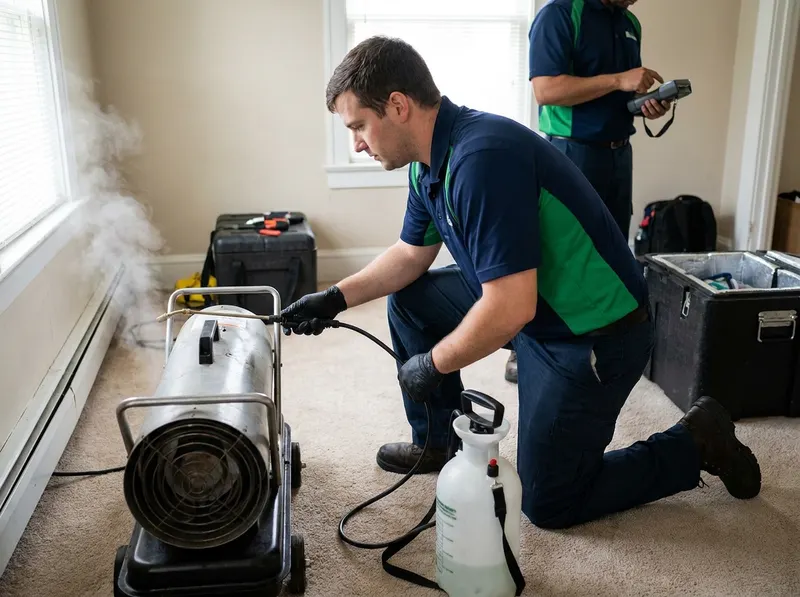
Restoring immediate sanctuary to a home invaded by nocturnal pests requires addressing the biological resilience of bed bugs in river-basin climates. Bed bug thermal and chemical elimination in Memphis addresses infestations by penetrating deep into physical hiding zones where surface sprays fail. Structural heat targets the thermal death point established by the U.S. Environmental Protection Agency, sustaining ambient room air between 122°F and 135°F. This high-convection airflow permeates mattress seams, baseboards, upholstery folds, and behind drywall without damaging furniture. To prevent surviving insects from relocating into untreated voids during heating, technicians apply non-repellent chemical barriers and dust formulations along wall plates and carpet tack strips, aligning with housing safety benchmarks maintained by the U.S. Department of Housing and Urban Development. Mobile service units dispatch directly from service zones across Shelby County rather than requiring customer visits to a commercial storefront, serving historic architectural layouts in Cooper-Young, Central Gardens, and Midtown, as well as suburban residences in Cordova, Raleigh, Whitehaven, Binghampton, and Berclair.
Selecting between standalone chemical treatment and hybrid thermal-chemical remediation depends on structural clutter and infestation density. Chemical-only liquid applications require 2 to 3 repeated visits spaced 14 days apart to intercept newly hatched nymphs, whereas thermal eradication neutralizes all life stages, including eggs, in a single operational day. The trade-off is preparatory commitment: whole-home heat remediation requires residents to remove meltable plastics, pressurized aerosols, and delicate oil paintings, whereas chemical remediation requires meticulous vacuuming and laundering protocols guided by the Centers for Disease Control and Prevention. ClearHarbor Bug Management confirms that every thermal process uses calibrated industrial heaters monitored by multi-sensor digital probes, eliminating cold spots near exterior brick surfaces or concrete foundation walls.
1. Technicians conduct an initial diagnostic sweep using high-lumen detection lamps to map active harboring zones in box springs, electrical faceplates, and framing timber. 2. Industrial heaters and axial air movers are systematically positioned to elevate ambient indoor air to lethal thresholds, guided by thermal standards from the National Pest Management Association. 3. Technicians rotate furnishings, open dresser drawers, and verify internal core temperatures of thick mattresses using infrared thermometer arrays. 4. Following thermal drawdown, technicians apply targeted, EPA-registered microencapsulated residuals and desiccating silica dusts into wall voids to build long-term defense, adhering to guidelines established by the Tennessee Department of Agriculture Pesticide Division. 5. A follow-up inspection verifies absolute harbor clearance, ensuring structural tranquility and safe residential re-entry. Local dispatch schedules operate along major transit corridors including Interstate 240, Sam Cooper Boulevard, and Poplar Avenue, providing localized treatment without unexpected post-inspection fee changes.
Every job gets a firm, written price after a free on-site visit.
Tell us about your bed bug thermal and chemical elimination job in Memphis and we'll send a clear, written quote, usually the same day.
 ClearHarbor Bug Management