German cockroach cleanouts address acute kitchen and bathroom infestations where nocturnal foraging disrupts living spaces and contaminates pantry goods. Unlike peridomestic outdoor roaches, *Blattella germanica* lives…
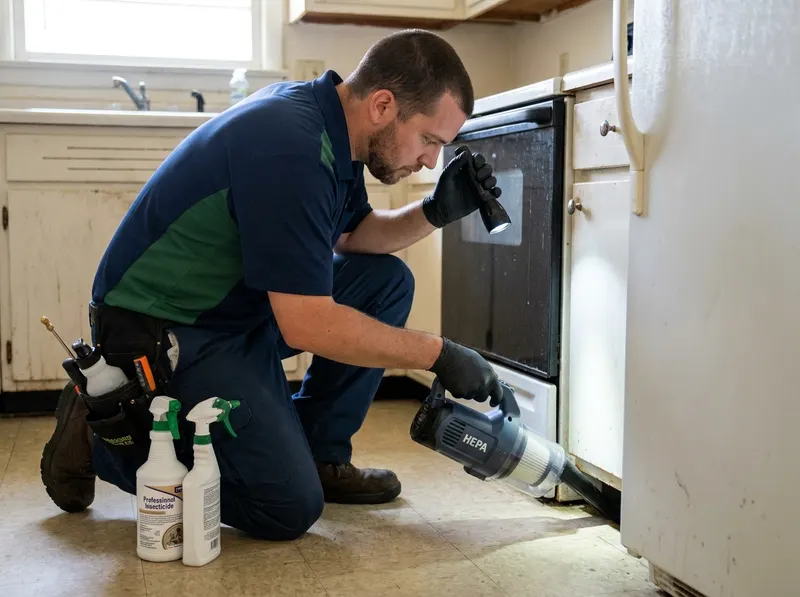
German cockroach cleanouts address acute kitchen and bathroom infestations where nocturnal foraging disrupts living spaces and contaminates pantry goods. Unlike peridomestic outdoor roaches, *Blattella germanica* lives exclusively indoors and reproduces rapidly, producing up to 48 eggs per ootheca every 30 to 40 days as documented by University of Florida Entomology. In historic wood-framed bungalows throughout Midtown and Central Gardens, or high-density rental properties across Binghampton and Berclair, ambient interior humidity accelerates these breeding cycles. ClearHarbor Bug Management implements an integrated framework designed around strict EPA Integrated Pest Management principles rather than indiscriminate baseboard broadcasting, applying non-volatile bait matrices directly inside hidden aggregations to restore a clean, peaceful living environment.
Treatment begins with an inspection of primary harborages, specifically heat-generating motor compartments, drawer glides, and behind drywall escutcheon plates. Technicians introduce targeted baits incorporating active ingredients evaluated by the CDC Healthy Homes program for indoor allergens alongside juvenile hormone mimics approved under the California Department of Pesticide Regulation standards. The trade-off between cleanout methods lies in speed versus collateral disruption: total-release foggers force roaches deeper into wall cavities and leave toxic residues across countertops, whereas targeted baiting and crack-and-crevice bait injection remain localized inside structural voids, preserving indoor air quality for children and pets while systematically collapsing the egg-laying colony within 3 weeks.
1. Structural moisture assessment and thermal imaging of plumbing voids to locate active roach clusters near kitchen lines.
2. HEPA-filtered vacuum extraction to physically remove visible adults, dead nymphs, and cast skins, immediately lowering biological contamination.
3. Precision placement of low-toxicity baits and insect growth regulators strictly inside structural hinges, voids, and under-counter tracks.
4. Written sanitation guidelines and follow-up monitoring schedule within 14 days to confirm total colony collapse.
Structural moisture vectors frequently compound pest burdens across Shelby County. Leaks identified around garbage disposals or unsealed pipe penetrations allow populations to flourish regardless of cleaning regimens; residents can access water quality and home leak diagnostic standards through Memphis Light, Gas and Water and city code recommendations via the City of Memphis Code Enforcement. Technicians seal small access gaps using copper mesh and silicone sealants compliant with ASTM C920 sealants specifications. For homes bordering wet tree canopies near Overton Park or the Memphis Botanic Garden, moisture management reduces secondary harborages, aligning with biological containment procedures published by the University of Tennessee Extension and chemical handling standards overseen by the Tennessee Department of Agriculture Pesticides Division. Further environmental mitigation data can be cross-referenced with public resources from Shelby County Government.
Every job gets a firm, written price after a free on-site visit.
Tell us about your german cockroach cleanout job in Memphis and we'll send a clear, written quote, usually the same day.
 ClearHarbor Bug Management